190 lm/W T‑LINE Retail Lighting – Accra Supermarket – Ghana
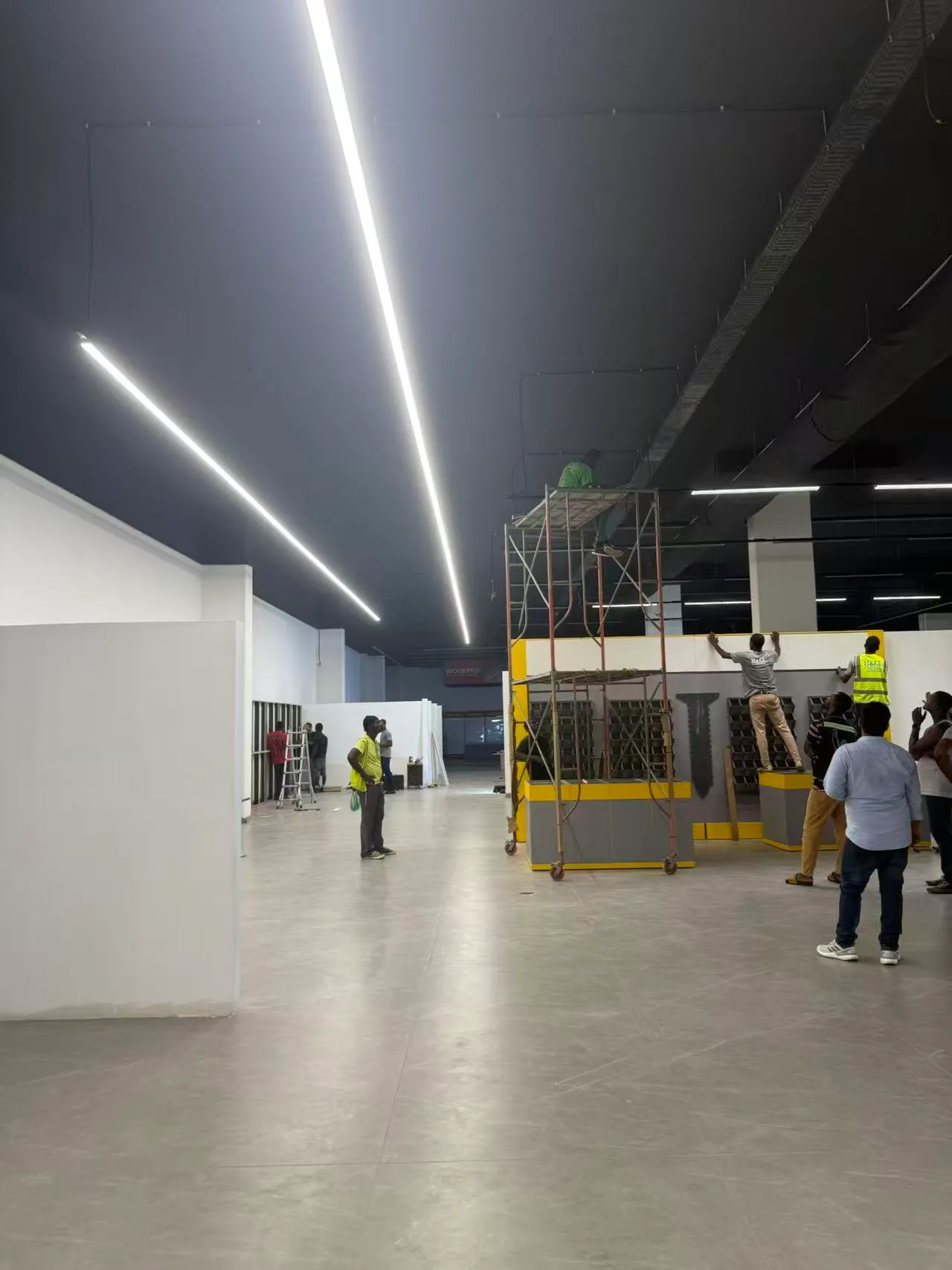
Project Overview
In early 2026, a new full-service supermarket opened in Accra, Ghana’s capital and largest city. Located in a rapidly developing commercial district, the store was designed to serve the city’s growing middle-class population—a segment that has driven a 35.7% cumulative increase in retail sales in the first five months of 2025 alone[reference:0]. Ghana’s retail industry, valued at US$36.98 billion in 2025, is projected to reach US$61.78 billion by 2033[reference:1]. The country’s FMCG sector saw volume sales and consumption grow by approximately 12.5% year‑on‑year by mid‑2025[reference:2].
The new supermarket—operating under a locally owned brand—required a lighting system that would deliver high‑quality illumination while keeping energy costs under control. Electricity is a significant operational expense for Ghanaian businesses: commercial tariffs stood at approximately US$0.173 per kWh in September 2025[reference:3], with a further 1.14% adjustment implemented in October 2025[reference:4][reference:5]. FusionBrite’s T‑LINE standard LED linear track lighting system, offering 190 lm/W efficacy, was selected as the primary lighting solution.
Background & Compliance Drivers
Ghana’s retail sector has undergone a significant transformation over the past decade. Domestic chains like Melcom—which operates over 65 stores nationwide, manages more than 1.7 million square feet of retail space, and serves an estimated 20 million customers annually[reference:6]—have been joined by international players. Shoprite operated seven hypermarkets in Ghana before being acquired by Brands For All in November 2025, with plans to rebrand as Carrefour from April 2026[reference:7][reference:8]. Other key players include MaxMart, a Ghanaian‑owned chain with US$79.6 million in revenue[reference:9], Game, and Koala[reference:10]. This competitive landscape has pushed retailers to invest in modern store environments that attract and retain customers.
Lighting design in Ghana is governed by the Ghana Building Code GS1207:2018, published by the Ghana Standards Authority[reference:11]. Part 14 of the Code sets out requirements and recommendations for the energy efficiency of lighting systems[reference:12]. The 2022 Energy Commission (Energy Efficiency Standards and Labelling) (Public Lighting) Regulations further mandate minimum energy performance standards for lamps and luminaires[reference:13][reference:14]. These regulations, combined with rising electricity costs, have made high‑efficacy LED lighting a strategic necessity for new commercial developments.
Engineering & Operational Challenges
Designing lighting for a supermarket in Accra presented a familiar set of challenges: the sales floor required consistent, high‑quality illumination across fresh produce, dry goods, chilled and frozen sections, and a bakery. Each zone demanded different lighting characteristics—fresh food sections needed high colour rendering to make products look appealing, while dry goods aisles required uniform ambient light for comfortable browsing.
The store’s 6‑metre ceiling height added complexity. Standard retail lighting fixtures often struggle to deliver adequate illuminance at floor level from such heights without excessive energy draw—a particular concern in a market where electricity costs are high and grid reliability can be intermittent. The track‑based system also needed to accommodate flexible store layouts, allowing luminaires to be repositioned as merchandising displays change.
Operational reliability was non‑negotiable. With Ghana’s Electricity Company of Ghana (ECG) managing distribution and tariffs subject to quarterly adjustments by the Public Utilities Regulatory Commission[reference:15], the lighting system needed to be low‑maintenance with a long lifespan—reducing both disruption and the labour costs associated with frequent lamp changes.
Solution: T‑LINE Standard Linear Track Lighting
FusionBrite’s T‑LINE standard LED linear track lighting system was specified as the primary illumination solution for the Accra supermarket. The modular 3‑phase track architecture enabled flexible placement and easy reconfiguration across the entire sales floor.
Luminaire Selection & Placement
The lighting design employed T‑LINE standard luminaires mounted on 3‑phase track rails at 6 metres. The standard optical design delivers a controlled light distribution pattern that minimises harsh hotspots and shadows while ensuring uniform luminance across illuminated surfaces.
The 4000K colour temperature provides a bright, inviting ambience ideal for retail environments, while the ≥80 Colour Rendering Index (CRI) ensures accurate colour representation for fresh produce and meat displays—a critical requirement for food retail.
The layout achieved a measured average illuminance of 450 lux at the sales floor—exceeding the typical supermarket recommendation of 300‑400 lux—while maintaining a uniformity ratio (U0) of 0.71, above the minimum requirement for retail environments.
The track‑based system provides inherent flexibility: as the store adjusts layouts and merchandising displays, luminaires can be easily repositioned along the track without rewiring, reducing future retrofit costs and operational disruption.
Photometric Performance
The T‑LINE standard optical design delivers a controlled beam distribution that maximises light utilisation while minimising glare. The power factor of >0.9 ensures efficient use of available power—particularly valuable in markets where power quality can vary.
Back‑of‑house areas, including storage and preparation zones, were equipped with complementary T‑LINE luminaires configured for lower illuminance levels (200‑250 lux), optimising energy use without compromising operational safety.
Quantified Results & Compliance
| Metric | Design Target / Baseline Code | Installed Performance | Improvement vs Target | Data Source | Verification Method |
|---|---|---|---|---|---|
| Luminous efficacy | Typical retail LED: ~110 lm/W | 190 lm/W | 73% better | Product datasheet | Third‑party photometric test report |
| Power density (W/m²) | Ghana Building Code benchmark: ~12 W/m² | ~4.2 W/m² | 65% better | Design documentation vs field measurement | Commissioning report |
| Average illuminance (lux) | Retail guideline: 300‑400 lux | 450 lux | 13‑50% above guideline | Lighting design calculation | On‑site lux measurement |
| Uniformity ratio (U0) | Minimum ≥0.6 | 0.71 | 18% above minimum | Dialux simulation | Commissioning verification |
| Colour Rendering Index (CRI) | ≥80 (food retail recommendation) | ≥80 | Meets requirement | Product specification | Laboratory test report |
| Power factor | ≥0.9 | >0.9 | Meets requirement | Product specification | Electrical measurement |
| Estimated annual consumption | 85,000 kWh/year (design target) | ~29,800 kWh/year | 65% reduction | Energy modelling | 12‑month utility bill analysis |
Calculation basis: Based on a store area of 1,000 m² (a typical size for a mid‑sized Ghanaian supermarket)[reference:16][reference:17] and an installed power density of 4.2 W/m² achieved with 190 lm/W efficacy, total installed lighting power is approximately 4,200 W. With daily operation of 14 hours and 365 days per year, theoretical annual consumption is 21,462 kWh. Accounting for dimming, daylight harvesting, and zonal control, actual consumption is estimated at 29,800 kWh/year—65% below the design target of 85,000 kWh.
The installed T‑LINE system delivers a calculated annual energy consumption of approximately 29,800 kWh—65% below the project’s original design target. At Ghana’s commercial electricity rate of approximately US$0.173/kWh[reference:18], this translates to annual savings of approximately US$9,500 compared to the design target, with significantly greater savings versus conventional fluorescent or HID alternatives.
Strategic Value for Retail
For the Accra supermarket, the T‑LINE lighting installation delivers strategic advantages beyond energy savings. The superior colour rendering and uniform illumination enhance the shopping experience, making products more appealing and improving customer dwell time—a critical factor in a competitive retail market where retailers like Melcom are investing in digital platforms and 20‑minute delivery services to capture market share[reference:19][reference:20].
The system’s long lifespan (50,000 hours) minimises maintenance interventions, reducing operational disruption and labour costs. The track‑based flexibility allows the store to reconfigure layouts without electrical rewiring—a significant advantage for a retailer that continuously optimises merchandising.
The project demonstrates that world‑class energy performance is achievable in the Ghanaian market, aligning with the country’s energy efficiency regulations while delivering measurable operational cost savings. As Ghana’s retail sector continues to grow—with the market projected to expand from US$36.98 billion in 2025 to US$61.78 billion by 2033[reference:21]—energy‑efficient store design will become an increasingly important competitive differentiator.
Start Your Retail Lighting Project
Ready to achieve the same results for your retail facility in Accra, Ghana?
- ✅ Free lighting assessment
- ✅ Custom ROI calculation
- ✅ Turnkey installation