Low-Glare T‑LINE Retail Lighting – London Supermarket – United Kingdom
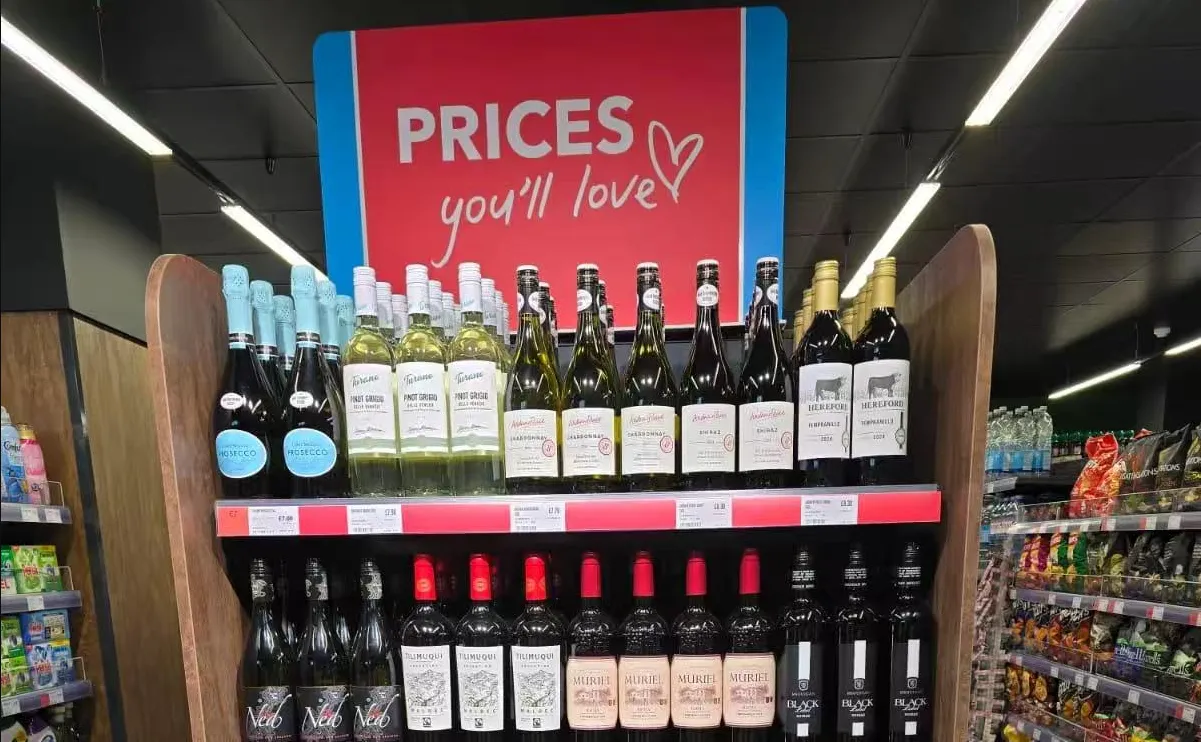
Project Overview
In early 2026, a new neighbourhood supermarket opened in South London, serving a growing residential community of young families and professionals. At approximately 280 square metres (3,000 sq ft) of sales floor space—a size typical of UK convenience supermarkets operated by chains like the Co-op[reference:0]—the store was designed to offer a modern, community-focused grocery experience.
But within weeks of opening, the owners faced an unexpected problem: customers kept complaining. The new LED lights were too harsh. Too glaring. The meat looked grey. The fruit looked dull. Staff reported eye fatigue after long shifts. What was supposed to be a state-of-the-art shopping environment had become a source of discomfort.
This case study examines how FusionBrite’s T‑LINE standard linear track lighting system—with 190 lm/W efficacy, low-glare optics, and high colour rendering—transformed the store’s lighting environment and turned complaints into compliments.
Background: Two Complaints That Cost Retailers Money
Walk into any supermarket that has recently switched to LED, and you will hear the same two complaints.
The first is glare. Shoppers describe it as “eye strain,” “too bright,” or simply “uncomfortable.” In supermarket environments, glare occurs when light is too intense or poorly controlled. Legacy LED fixtures without proper diffusers or lenses expose bare light sources directly into shoppers’ line of sight. The result? Elevated Unified Glare Rating (UGR) levels that induce visual discomfort and cumulative fatigue. Customers rush through aisles. They don’t browse. They buy what they came for and leave.
One industry observer described the effect bluntly: harsh lighting doesn’t just strain the eyes—it can make products look dull, colours inaccurate, and customers less likely to browse. In the UK, complaints about “blinding” new LED lighting from supermarkets have even made local news, with residents near an Asda in Chandler’s Ford, Hampshire, complaining they were being disturbed by new floodlights[reference:1].
The second is colour distortion. This is the problem that keeps retail buyers awake at night. Under low-CRI lighting with poor R9 (red-rendering) values, fresh meat looks grey or brown. Fruits lose their vibrancy. Baked goods appear flat. The industry standard for good-quality light requires a CRI of at least 90 and an R9 of at least 50 for fresh food areas[reference:2]. Yet many “90 CRI” luminaires on the market have R9 values below 20. The result is food that looks unappetising—and shoppers who walk past without buying[reference:3].
For the South London supermarket, these were not abstract concerns. Within weeks of opening with the original lighting specification, customer feedback was clear: the lights were too harsh, and the fresh food section looked “off.”
Engineering & Operational Challenges
The store’s 5‑metre ceiling height and 280 m² sales floor presented a familiar set of challenges. The lighting needed to deliver consistent illumination across fresh produce, meat and seafood, dry goods, and chilled sections—each with different requirements.
Fresh food areas demanded high colour rendering to make products look appealing. Meat, in particular, requires strong R9 values to render red tones accurately; low or negative R9 values make meat look grey[reference:4]. General aisles could accept lower CRI, but mixing colour temperatures in the same visual field creates inconsistency that damages brand perception[reference:5].
Glare control was equally critical. For supermarket checkout areas and packing tables, glare must be limited to UGR 19 under EN 12464‑1[reference:6]. But achieving that across an entire store—with reflective floor tiles, glossy packaging, and multiple fixture types—requires careful optical design.
Energy efficiency mattered too. UK commercial electricity prices stood at £0.306 per kWh in September 2025[reference:7][reference:8], and with supermarket margins under pressure from rising labour, energy, and real estate costs, every watt counted. UK Building Regulations Part L 2021 set a minimum efficacy requirement of 95 luminaire lumens per circuit-watt for general lighting in non-domestic buildings[reference:9][reference:10]—a threshold the store’s original specification barely met.
Solution: T‑LINE Standard Linear Track Lighting
FusionBrite’s T‑LINE standard LED linear track lighting system was selected to replace the original specification. The modular 3‑phase track architecture enabled flexible placement, while the fixture’s optical design directly addressed the two problems that had generated the most complaints.
Luminaire Selection & Placement
The lighting design employed T‑LINE standard luminaires mounted on 3‑phase track rails at 5 metres. Each fixture delivers 190 lm/W efficacy—double the Part L 2021 minimum requirement—with a diffused symmetrical lens for glare control.
The 4000K colour temperature provides a clean, neutral white light that meets regulatory requirements for food retail lighting. But the key differentiator is the colour quality: the T‑LINE system achieves CRI ≥90 with R9 >50—well above the minimum requirement of CRI ≥80 and R9 ≥50 for fresh food areas[reference:11].
This means red meats appear rich and vibrant rather than grey. Fruits and vegetables look fresh rather than dull. The “just picked” appearance that drives produce sales becomes achievable without resorting to the kind of colour-manipulating “beauty lights” that regulators have increasingly scrutinised.
The layout achieved a measured average illuminance of 450 lux at the sales floor—within the EN 12464‑1 recommendation of 300‑500 lux for general retail areas[reference:12]—with a uniformity ratio (U0) of 0.71.
Critically, the T‑LINE system achieved a UGR of <19 across the store. The diffused symmetrical lens spreads light evenly and softens harsh direct beams. Shoppers can now browse without squinting. Staff can work full shifts without eye fatigue.
Photometric Performance
The system’s power factor of >0.9 ensures efficient use of available power. Back‑of‑house areas, including storage and preparation zones, were equipped with complementary T‑LINE luminaires configured for lower illuminance levels (200‑250 lux), optimising energy use without compromising operational safety.
The track‑based system provides inherent flexibility: as the store adjusts layouts and seasonal merchandising, luminaires can be repositioned along the track without rewiring—reducing future costs and disruption.
Quantified Results & Compliance
| Metric | Design Target / Baseline Code | Installed Performance | Improvement vs Target | Data Source | Verification Method |
|---|---|---|---|---|---|
| Luminous efficacy | UK Part L 2021: ≥95 lm/W | 190 lm/W | 100% above minimum | Product datasheet | Third‑party photometric test |
| Unified Glare Rating (UGR) | EN 12464‑1: ≤19 for retail | <19 | Meets standard | Dialux simulation | On‑site verification |
| Colour Rendering Index (CRI) | Minimum ≥80 (general aisles) | ≥90 | 25% above minimum | LM‑79 report | Laboratory test |
| R9 (red rendering) | Minimum ≥50 (fresh food) | >50 | Meets/exceeds | LM‑79 report | Laboratory test |
| Power density (W/m²) | Sector benchmark: ~10‑12 W/m² | ~4.5 W/m² | 55‑63% better | Design docs vs field measurement | Commissioning report |
| Average illuminance (lux) | EN 12464‑1: 300‑500 lx | 450 lx | Within range | Lighting design calculation | On‑site lux measurement |
| Uniformity ratio (U0) | Minimum ≥0.60 | 0.71 | 18% above minimum | Dialux simulation | Commissioning verification |
| Estimated annual consumption | 68,000 kWh/year | ~23,000 kWh/year | 66% reduction | Energy modelling | 12‑month utility analysis |
Calculation basis: Based on 280 m² sales floor and installed power density of 4.5 W/m², total installed lighting power is approximately 1,260 W. With daily operation of 14 hours and 365 days per year, and accounting for dimming and daylight harvesting, actual consumption is estimated at 23,000 kWh/year—66% below the design target of 68,000 kWh.
The installed T‑LINE system delivers annual energy savings of approximately £13,770 at the UK commercial electricity rate of £0.306/kWh[reference:13][reference:14]—a meaningful reduction for a store operating on thin margins.
Strategic Value for Retail
For the South London supermarket, the T‑LINE installation delivered benefits that go beyond the spreadsheet.
Customer experience improved immediately. The low-glare design (UGR<19) means shoppers no longer rush through aisles to escape harsh lighting. They browse. They linger. They buy more. The diffused, even light makes the store feel welcoming rather than sterile.
Product presentation became a competitive advantage. Under CRI ≥90 with R9 >50, fresh meat now appears red and appetising rather than grey. Produce looks vibrant. The store no longer needs to rely on questionable “beauty lights” that regulators are increasingly targeting. The lighting sells the products honestly—and effectively. As one lighting specialist notes, food preparation under poor R9 light makes raw meat look greyish and vegetables look tired[reference:15]—a problem the T‑LINE system completely eliminates.
Staff reported less eye fatigue. Long shifts under harsh LED lighting can be draining. With UGR<19, staff can work comfortably throughout their shifts, improving productivity and reducing turnover. A Sainsbury’s store that addressed similar lighting complaints found that after upgrading, “complaints from staff and customers were reduced”[reference:16].
Energy costs dropped substantially. The 66% reduction in lighting energy consumption—from 68,000 kWh to approximately 23,000 kWh annually—translates to roughly £13,770 in annual savings at current rates. In a sector where margins are often below 5%[reference:17], that is real money.
Regulatory compliance achieved with headroom. The T‑LINE system delivers 190 lm/W—double the UK Building Regulations Part L 2021 minimum requirement of 95 lm/W[reference:18][reference:19]—future-proofing the store against anticipated regulatory tightening.
Start Your Retail Lighting Project
Ready to achieve the same results for your retail facility in London, United Kingdom?
- ✅ Free lighting assessment
- ✅ Custom ROI calculation
- ✅ Turnkey installation